Join Us in Nashville

Collaborate  |  Advocate  |  Implement

A community's opportunity for socializing is among the
most influential factors in determining where people choose to live
The 2010 Knight Foundation’s Soul of the Community Project

Multiple Opportunities for Networking and Learning

THE SOCIABLE CITY SUMMIT is the premier in-person event for learning about social economy management. This annual networking event is a unique opportunity to connect with a broad network of leaders advancing innovation in multiple fields —law enforcement, business district management, city planning and economic development, nighttime venue operations, and more. No other event convenes such diverse perspectives on how to create safe, vibrant daylife and nightlife.

GUIDING PRINCIPLES

A thriving city center is built on a dynamic social economy—where people come together to shop, dine, drink, enjoy live music, and dance. Creating these vibrant spaces requires bold innovation in licensing for dining and entertainment, 24-hour mobility planning (including safe micromobility at night), and mixed-use development that harmonizes commercial, residential, and social activity around the clock.

  • Sociability: Sharing an experience with other people that stimulates senses, intellect or emotions.
  • Hospitality: Creating a social space for people to dine, drink, listen to entertainment, dance, and shop.
  • Nightlife: The social activity or entertainment available at night in a town or city.
  • Social economy: The economic activity generated by hospitality and event industries that support sociability.
  • Social enhancers: Alcohol, music, and people can enhance sociability but may be risk factors, especially with time.
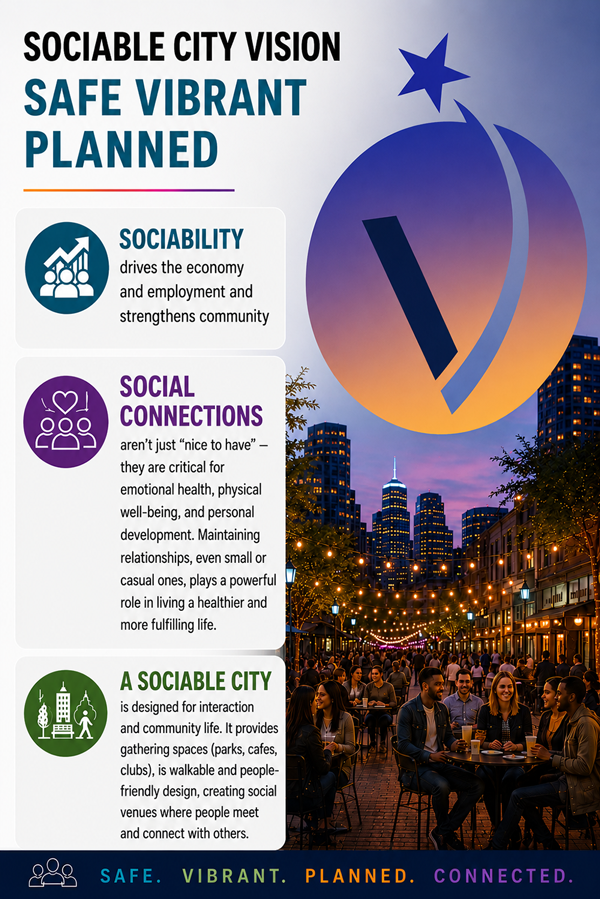
  • Sociable city: A city that fosters vibrant, safe, and inclusive spaces for social interaction across all hours.
  • Responsible hospitality: Assuring a safe and secure environment accessible to all.

Join in sharing tools and promising practices including:

  1. Innovation: Thought leaders share insights in short introductory talks followed with more in-depth workshops
  2. Breakouts: Technical seminars and case studies
  3. Trendspotting: Facilitated discussions and brainstorming on a key topic
  4. Mobile Workshops: Interactive learning experiences in Nashville

Gather Solutions and Strategies

Interact with Practitioners on These Topics

  • Create a dedicated office on the social economy for daytime and nighttime management
  • Form a team for public safety and venue compliance
  • Learn about innovation in nighttime mobility
  • Gather tools to preserve the historical and cultural value of independent venues
  • Enhance public spaces with outdoor seating, markets, and festivals
  • Build policy, mediation, and conflict resolution for mixed-use areas
  • Develop harm-reduction strategies for alcohol, drugs, and guns
  • Assure safety for women and vulnerable populations in venues and public space
  • Encourage greater cultural diversity in the social economy

Become Part of a Global Network that Makes Things Happen!

The population may be divided into three groups: the few who make things happen, the many more who watch things happen, and the overwhelming majority who have no notion of what happens. Nicholas Murray Butler, Columbia University

RHI has held events since 1984. The Sociable City Summit series began in 2015 in Los Angeles and Chicago, then Charleston, Austin, New Orleans, Philadelphia, Seattle, Virtual, New York, Dallas, Sacramento, and this year, Nashville. Here is a summary of unique representatives, cities, states/provinces and countries since 2015. Many returning to showcase their accomplishments and insights.

Themes and Teams

View session topics and discussion questions

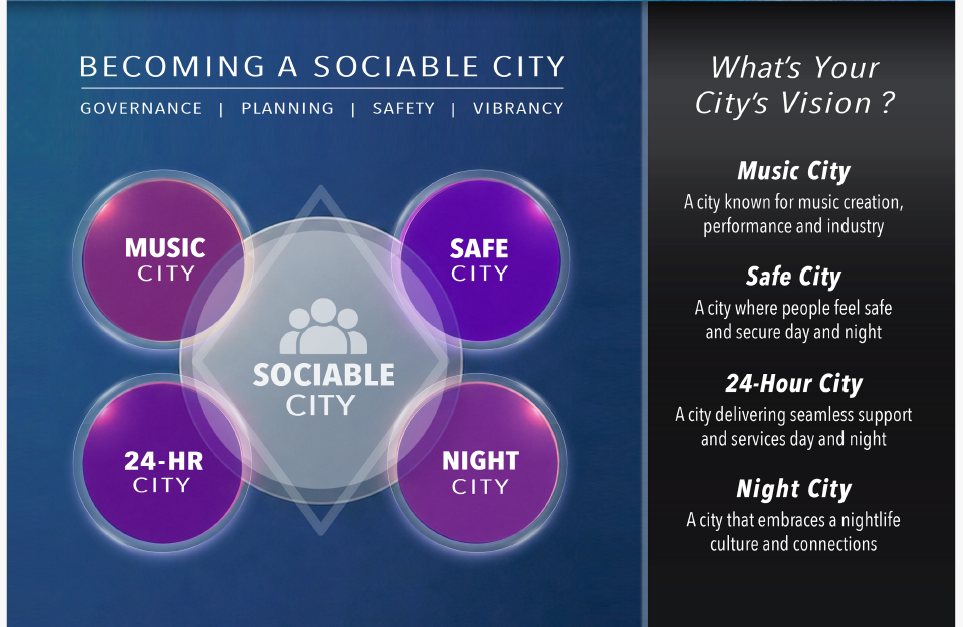
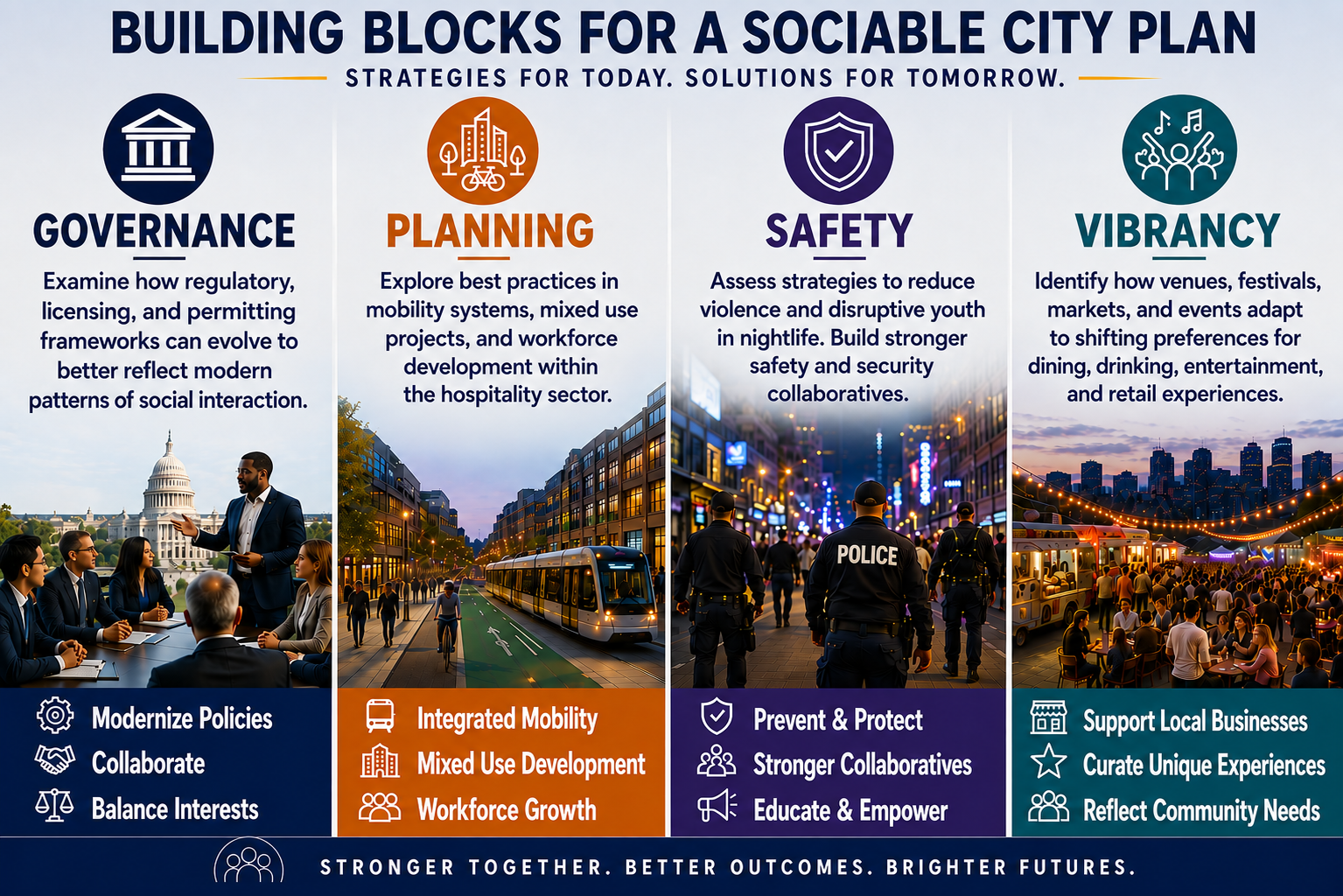
Governance

An alliance of stakeholders dedicated to nighttime governance is key to long-term success

Planning

Sociable cities anticipate mobility needs and create systems to maintain a high quality of life

Safety

Safety in social districts and within venues requires coordination among public and private partners

Vibrancy

Vibrancy is created by the mix of social experiences in venues and in public space both day and night

Governance

  • What is the best structure for a nighttime social economy office? 
  • What is the staffing requirements for managing the office?
  • Should the office have regulatory authority for licensing or permitting entertainment venues?
  • Who should be represented on an advisory board or commission?

State-Local Collaboration

  • Does your state need a staff liaison or office on the social economy for daytime and nighttime?
  • Identify strategies for more efficient compliance investigation for state regulators.
  • What state policy facilitates or impedes local management of district development and venue safety?

Build Your Team

  • Night Mayors/ Managers
  • City Managers
  • Nightlife Advisory Board
  • Elected officials - state and local
  • State associations

Public Space Management

  • How does a city manage competing interests in public space for bike lanes, pedestrians, vehicles, etc.
  • Managing licensed and unlicensed vendors, buskers, and other public space commercial uses.
  • Permitting solutions, neighborhood/venue balance, sound ordinance.
  • Mediation and conflict resolution among city, residents, and businesses.
  • Converting historic districts into pedestrian-friendly zones.
  • Is “daylife” the new “nightlife” with festivals, early performance schedules, daytime dance clubs?

Build Your Team

  • Business District Managers
  • City Planners
  • Economic Development Directors
  • Mobility Systems
  • Residential Associations
  • University Administrators

Public and Venue Safety

  • Interagency teams for education and compliance.
  • Venue staff security and service procedures and training.
  • Liability and insurance trends
  • Technology: ID scanners, body worn cameras, use of AI in staffing and inventory management.
  • Structured on-boarding for new businesses with relevant local and state agencies.
  • Dedicated police officers with specialized training in entertainment/social districts.
  • Can private security augment limited police resources to assure civility and safety?

Evidence Based Policy and Resource Allocation

  • Storefront business analysis: Mix of retail and service uses, number of social venues, occupancy, employment, etc.
  • Venue Compliance: Monitoring compliance, voluntary and required training, inspections, place of last drink.
  • Safety: Impaired driving – car, bike, scooter. Pedestrians. Assaults. Vandalism.

Build Your Team

  • Alcohol Regulations
  • Police: Municipal & Campus
  • Licensing & Regulatory Staf
  • Fire Department
  • Health Department
  • Code Compliance
  • Private Safety/ Security

Music is the Heartbeat of a City

  • What makes a music city?
  • How does a city identify and develop local talent?
  • What training is needed for musicians, performers, sound and lighting technicians?
  • What resources are available to support training, education, and practice?
  • How does a city get a “music brand” ? What are the benefits and downsides?
  • Authorizing the use of vacant warehouses for entertainment venues with extended hours.

Alcohol is the Lubricant of Sociability

  • What are the trends in alcohol consumption and alcohol related harm?
  • Sober movement: Is it more options for those who already do not to drink or for those who are switching?
  • Will public space consumption policies bring back residents, workers, and offices?
  • Managing youth gatherings and unlicensed alcohol use in public spaces and parking.
  • Role of THC beverages and “cannabis lounges” in the future of sociability.

Trends in Dining

  • What are the impacts from trends in localism, food trucks/vendors, take-out, and home delivery?
  • Are outdoor dining areas worth the investment? What were the benefits, impacts, and costs?
  • How are tariffs and deportations affecting supply chains, staffing, price points for consumers?
  • What is the future of the independent restaurant sector?

Storytelling | Songtelling | Sociability

  • What role does storytelling play in our socializing?
  • How can venues create more storytelling social experiences?
  • Can music performances be considered storytelling and promoted as such?
  • Should the Summit have a “storytelling” session?

Build Your Team

  • Venue Operators
  • Hospitality Associations
  • Events Planners
  • Music & Nightlife Advocates
  • Entertainment Marketing
  • Tourism/Destination Marketing

City Leaders Adapting to Change

Build it and They Will Come

Today, downtowns and city centers are struggling to adapt to changes in where people live, work, play, shop and study. Many governments and corporations are negotiating with employees on a hybrid approach to work, attempting to bring them back to vacant offices with long-term property leases while providing them the flexibility to work from home.

Join a unique opportunity to network with leaders advancing innovation in planning, public and venue safety, business district management, mobility, and conflict resolution in active daytime and nighttime social districts.

Your Peer-to-Peer Networking Opportunity

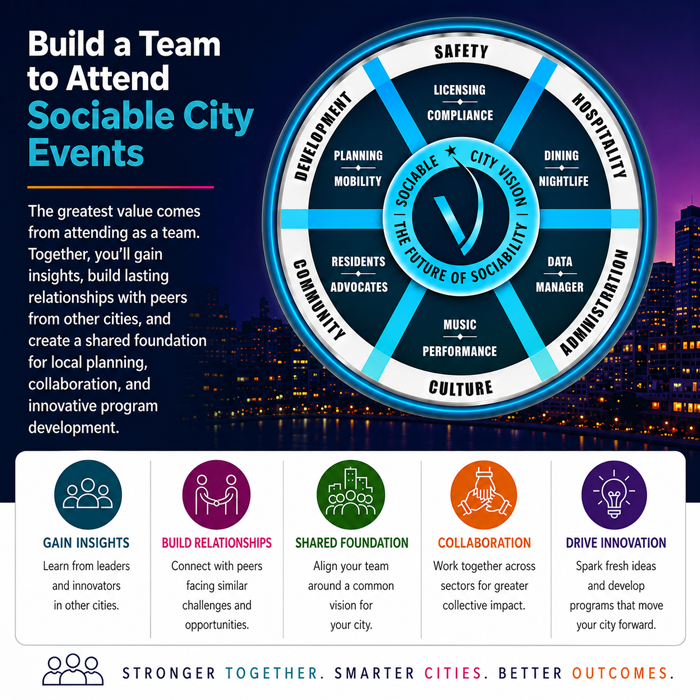
Meet Representatives from Diverse Backgrounds

  • Safety: Frontline supervisors and officers, including police, fire, code, alcohol, and health agencies
  • Administration: Elected officials, city managers, planning and economic development managers
  • Development: Public works, parking, transportation, and mobility managers
  • Hospitality: Operators, and association staff representing restaurants, bars, live and DJ music
  • Producers and distributors: Food, beverages, and equipment
  • Culture: Event and festival planners, promoters, placemaking and district management

Access Decades of Experience and Learning

The learning begins when you register!

When you and your team register, you’ll have access to RHI’s seminar series and e-learning curriculum to get you started on how to create a framework for a comprehensive sociable city plan.

Registration

Nashville Hosted Reception: Sunday, April 12 evening kick-off reception to meet friends and connect with previous connections.

Summit Registration Includes: Continental Breakfast and Luncheon; Educational Presentations and Workshops.

Academy Registration Includes: Online learning and onsite training, luncheon and breaks. Also includes workbook and reference documents.

Summit $100 Team Discount: Teams of 3+ people from the same city qualify for a Summit team discount. Write to Emily Lopez to get your team discount code. Each person registers separately using the same code.

Individual
$595
Summit Registration
Before January 23
Summit Team Rate
Before January 23
Registration
January 24to March 29
Late Registration
After March 30
Academy
Separate Registration
Individual - $695
Team - $595
Individual
$795
Individual
$180
Three or More on a Team
$495